
Spiritual competence is the ability to discern truth and live it out as you grow emotionally healthy. To be secure in Christ is to be spiritually competent: knowing how to interpret Scripture and actively pursuing growth—not perfection, but the steady movement from self-deception toward truth.
Carl Jung put it this way: “One does not become enlightened by imagining figures of light, but by making the darkness conscious” (Jung, Collected Works, Vol. 13). The key that makes this a spiritual endeavor and not a worldly one is knowing that God defines our true potential. To be that aware is only possible with God’s divine help. If we want to know ourselves better, we must also know God better. When we know God better, we will also know ourselves better.
Each moment in life presents an opportunity to either improve your competence or to remain indifferent. Your choice won’t change your worth before God, however, how you experience life will be vastly different.
Jung had another well-known phrase, “Neurosis is always a substitute for legitimate suffering.” It is profound but it is also somewhat cryptic. It’s worth a deeper look. Put another way, Jung is saying you can either suffer legitimately or suffer neurosis (Jung, Psychology and Religion, 1938).
The Spiritually Competent Avoid Suffering Needlessly
The greatest way to suffer needlessly is at your own hand. So often we inflict unnecessary punishment upon ourselves as a penance. Life has enough consequences built in without you adding your own.
Christ has already paid for your past, present, and future sins. What happens if you don’t fully grasp this core truth of the gospel? You probably develop a neurosis.
C. George Boeree described neurosis as a “poor ability to adapt to one’s environment, an inability to change one’s life patterns” (1). Common symptoms include anxiety, sadness or depression, anger, irritability, low self-worth, phobic avoidance, impulsive and compulsive acts, lethargy, disturbing thoughts, obsessive repetition, habitual fantasizing, negativity and cynicism, unhealthy dependency, aggressiveness, and perfectionism.
Is it possible that these symptoms show up as a result of avoiding the hard work of spiritual growth? I’m not suggesting it’s wrong to feel anxious or depressed — anxiety and depression are real experiences, sometimes with biological roots, and professional care has its place. But spiritual growth has its place too, and pursuing it can significantly reduce these symptoms.
Jung was an early advocate for character development in its most pure sense. He knew that we can only really be happy, fulfilled, and socially productive when we have not only come to know but also come to terms with our biggest challenge: ourselves.
Dr George Simon, Phd (2)
The Spiritually Competent Suffer As God Wills
Hebrews 10:32-39 and 1 Peter 3:13-17 provide a biblical perspective on legitimate suffering. It’s better to suffer while doing good than doing evil. Sometimes no matter what you do, you’re going to suffer. So it might as well be for noble reasons.
To suffer legitimately means you accept life as it is. You don’t need to escape from the fact that all living beings experience some suffering. The criminals on their crosses illustrate this idea:
One of the criminals who were hanged railed at him, saying, “Are you not the Christ? Save yourself and us!” But the other rebuked him, saying, “Do you not fear God, since you are under the same sentence of condemnation? And we indeed justly, for we are receiving the due reward of our deeds; but this man has done nothing wrong.” And he said, “Jesus, remember me when you come into your kingdom.” And he said to him, “Truly, I say to you, today you will be with me in paradise.”
Luke 23:39-43 ESV
The first criminal was trying to weasel his way out of the punishment as if he didn’t deserve it. The second criminal accepted the punishment but appealed to God’s grace. The avoidance of developing character leads away from legitimate suffering and toward distressing symptoms. The worst kind of suffering is suffering for no good reason.
If you try to cheat life by hoping someone will ignore your sins and give you a free pass, your circumstances will likely overtake you. This requires no effort on your part, but you can end up suffering more this way than the way of character development.
If you choose growth you will become more resilient and better able to meet life’s demands. This way requires you to choose humility by owning your sins and relying on God’s grace. Accepting responsibility for what you’ve done doesn’t usually remove consequences. You might still suffer, but your suffering will bear fruit such as being spiritually competent and easing your pain.
The second criminal’s attitude was far better than the first. He saw Jesus for who He is, and so he also saw himself for who he was: a guilty man with nothing to offer but an appeal to grace. He did not escape his cross — but he was secure in Christ, and that made all the difference.
This is the choice before you in every moment. You can suffer legitimately — owning your sin, accepting the consequences, and resting in grace — or you can suffer neurosis, dodging the pain and wearing the symptoms instead. Spiritual competence is choosing the first. Which suffering will you choose?
Read more about suffering needlessly.
(1) Boeree, C. G., Personality Theories e-text, http://webspace.ship.edu/cgboer/perscontents.html
(2) Additional thoughts on Carl Jung can be found at https://counsellingresource.com/features/2010/08/03/jung-words-of-wisdom
Image by Jeff Jacobs from Pixabay
Last Updated 20261004

Matt Pavlik is a professional counselor, author, and devoted follower of Christ. With decades of experience in Christian counseling, he writes with theological depth and everyday clarity. His resources—centered on salvation, identity, marriage, and emotional healing—are anchored in Scripture and guide believers to discover the freedom of their identity in Christ and the security of their salvation in Him. He and his wife Georgette, married since 1999, live in Centerville, Ohio, and have four adult children.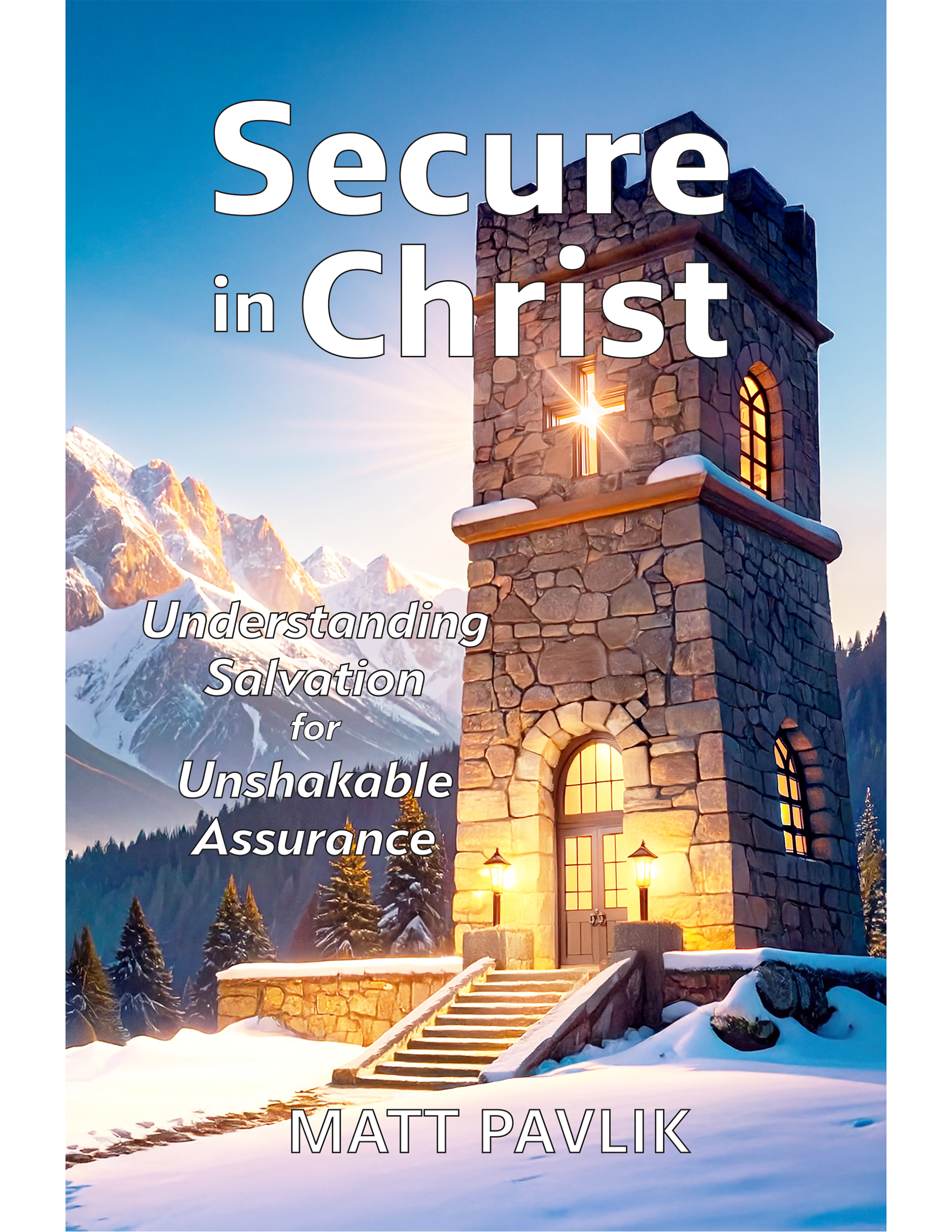



Thank you for all that you do in bringing light into the questionable and uncertainties so many experience. This is very important for me to read this. I believe God is at work in me.