
Your true identity isn’t found in pleasing others or adding rules to God’s grace—it is grounded entirely in the unaltered Gospel. When you compromise the message of Christ, you lose the power that brings clarity and joy to your daily purpose. Here is why protecting Gospel purity is the foundation of a confident, God-given identity.
The Gospel is the foundation of Christian identity. Without the Gospel, you couldn’t become born spiritually, so you’d never have access to your true identity as a child of God.
Altering the Gospel Destroys Its Power
When Paul wrote to the Galatians, he stressed repeatedly that the Gospel can’t be altered in any way. As soon as you add to it or subtract from it, you no longer have the Gospel. Paul made it clear that the primary reason anyone attempts to alter the message is to secure human approval:
For am I now seeking the approval of man, or of God? Or am I trying to please man? If I were still trying to please man, I would not be a servant of Christ.
Galatians 1:10 ESV
In our desire to be liked or accepted, we fall into two subtle traps:
- Watering Down the Gospel (Compromise): You might soft-pedal the truth to make it more palatable or socially acceptable. We want to make the doorway wider so more people qualify without feeling convicted. But the Gospel is already a free gift of grace—though it requires coming to God on His terms, not ours. When we try to make it fit human trends or subjective feelings, we strip away its power to actually transform lives.
- Tightening Up the Gospel (Legalism): On the flip side, you might try to add extra rules, standards, or performance metrics to make faith feel like an exclusive club. But making people jump through man-made hoops to earn God’s favor also robs the Gospel of its power. You cannot charge admission for something Christ already paid for in full.
Both extremes stem from people-pleasing. Whether through compromise or legalism, modifying the Gospel substitutes God’s approval for man’s opinion. Only the pure Gospel has the power to save.
Why Your Purpose Is Hidden in Your Identity
The more we try to please anyone but God, the further we drift from fulfilling His plan for our lives.
Worldly culture tells us that performance defines identity—that what you do, what you achieve, or what others think of you dictates who you are. This leaves people trapped on an endless treadmill of striving, constantly anxious about their purpose. When your job changes, a relationship ends, or your performance stumbles, your “identity” shatters along with it. Learn more about identity and performance.
The Gospel speaks the opposite: Your identity in Christ dictates your purpose.
God has a specific blueprint for your life. Every single day carries intentionality. God knows the exact day of spiritual rebirth. He strategically hides your purpose inside your new identity in Christ, so as you discover who you are in Him, your purpose naturally unfolds. When you know who you are in Christ—loved, redeemed, set apart, and secure—you no longer have to waste energy trying to prove yourself or seek human applause.
From a place of secure identity, your daily purpose becomes clear:
- You don’t serve to get an identity; you serve from an identity.
- You don’t love others to earn approval; you love because you are already fully approved in Christ.
- You can navigate life’s decisions with confidence rather than fear of failure.
When you protect the purity of the Gospel, you protect the purity of your identity. And when your identity is secure in Christ, living out your purpose becomes an act of freedom and joy.
Want to Go Deeper?
What can you do if you believe God gave you an identity and purpose, but you haven’t found them yet? You might start to doubt God when He says He made you for good works. Don’t give up on identity-comes-before-purpose.
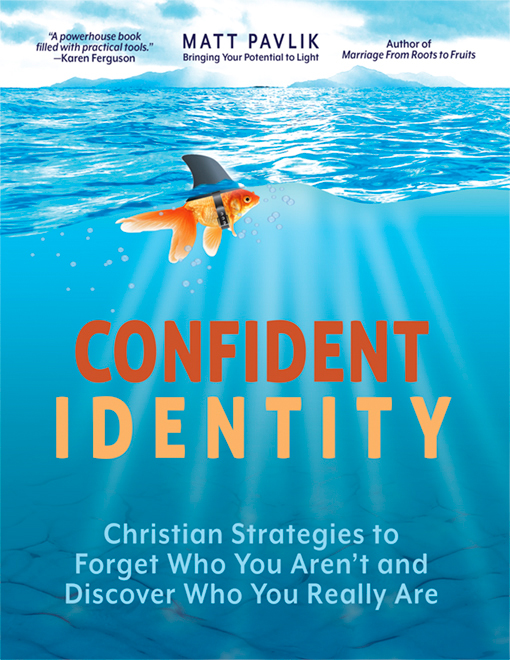
Discovering who God made you to be doesn’t happen by accident—it takes intentional reflection and grounding in truth. If you want practical guidance in uncovering your God-given design, check out my workbook, Confident Identity.
Last Updated 20260809

Matt Pavlik is a professional counselor, author, and devoted follower of Christ. With decades of experience in Christian counseling, he writes with theological depth and everyday clarity. His resources—centered on salvation, identity, marriage, and emotional healing—are anchored in Scripture and guide believers to discover the freedom of their identity in Christ and the security of their salvation in Him. He and his wife Georgette, married since 1999, live in Centerville, Ohio, and have four adult children.


“You might water down the Gospel so that more people qualify. The Gospel is already free. Or, almost free. You do have to want to spend eternity with God on His terms. The Gospel needs to be responded to for it to be effective. If we try to make it more inclusive, we steal away its power.“
How are we suppose to respond to the gospel? Is this are daily walk and our daily habits and attitudes/actions? My biggest concern is protection of identity inChrist and people stealing my identity in Christ. So when you say if we try to be more inclusive, are you referring to encompassing everything in the Bible and that we should focus on one lesson at a time? Or do you mean that following God is like being part of a special club and only special people can get in? Making someone jump through hoops to get in is something that has happened and does occur in some churches unfortunately.
No one can steal a person’s spiritual identity in Christ. It’s impossible. I’ve updated the post to explain more what I mean by altering the Gospel. Responding to the Gospel means recognizing what God has done that allows believers to be born again, and then acting out being a new creation in Christ. What we do matters, but does not change the Gospel’s power to bring about and sustain new birth.